NO CREAM. NOT A DROP. • LA CREMA? SI FA, NON SI VERSA.
01 / THE SAUCE HAS ENTERED THE CHAT
Put the carton down
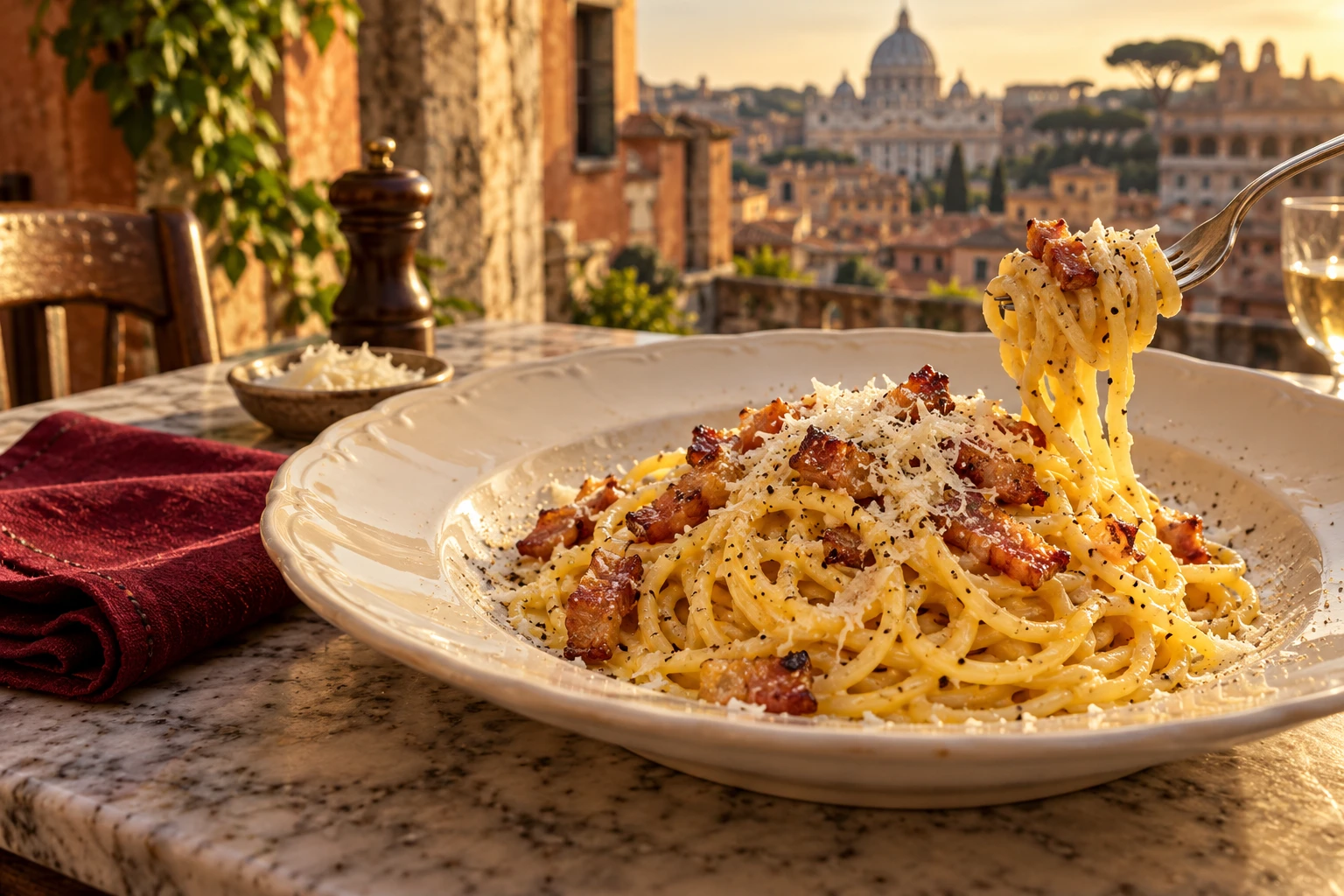
There is a moment in a good carbonara when the sauce turns glossy and clings to every strand. Nothing has been poured from a carton. Nobody has concealed a technical disaster beneath a blanket of dairy. Eggs, cheese, rendered pork fat and a little starchy cooking water have done the work. It looks extravagant because it is balanced, not because it contains everything in the fridge.
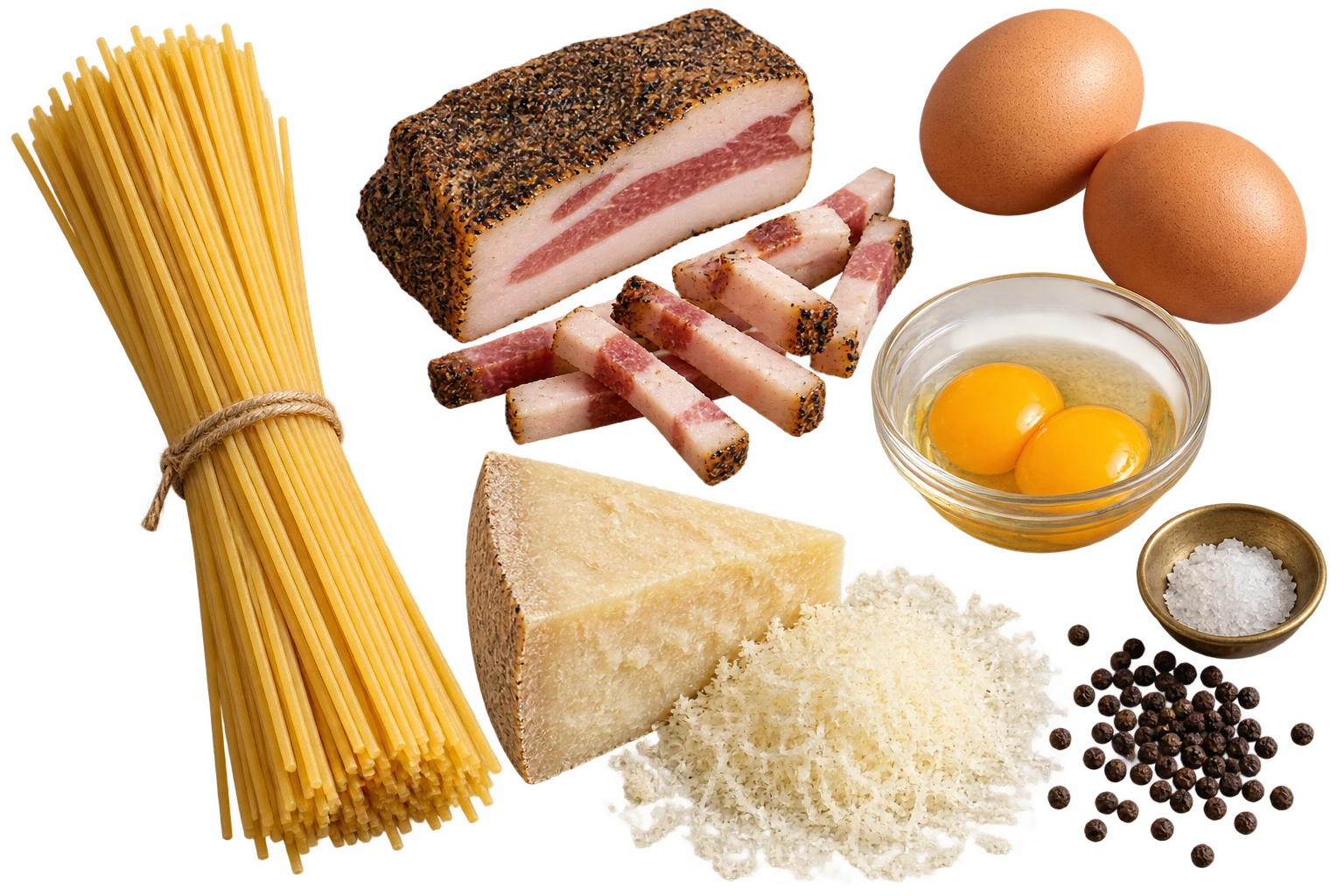
This is the version we are cooking: a contemporary Roman-style carbonara built around guanciale, Pecorino Romano, eggs, black pepper and pasta. Salt seasons the water; the pasta water helps bring the sauce together. The ingredient list is short. Your attention is the sixth ingredient.
And yes, we will defend the no-cream rule. But we will also open the archive, because food history is wonderfully inconvenient for anyone selling a single, unchanging origin story. A recipe can have a recognisable modern identity and a messy past. Both things can fit on the same table.
Small cast. Big personalities.
02 / SAY IT WITH YOUR CHEEKS
What exactly is guanciale?
Guanciale is cured pork cheek or jowl; its name comes from guancia, the Italian word for cheek. The pale fat is not packaging around the good bit. It is a crucial part of the ingredient, melting into the pan and giving the sauce its pork flavour and richness. The seasoning and curing style vary by producer.
It is different from pancetta, which comes from pork belly, and from the smoked bacon many supermarkets sell. Those products bring different proportions of meat and fat, different curing and, sometimes, smoke. You can make an enjoyable pasta with a substitute, but naming it honestly is more useful than pretending every cured pork product is interchangeable.
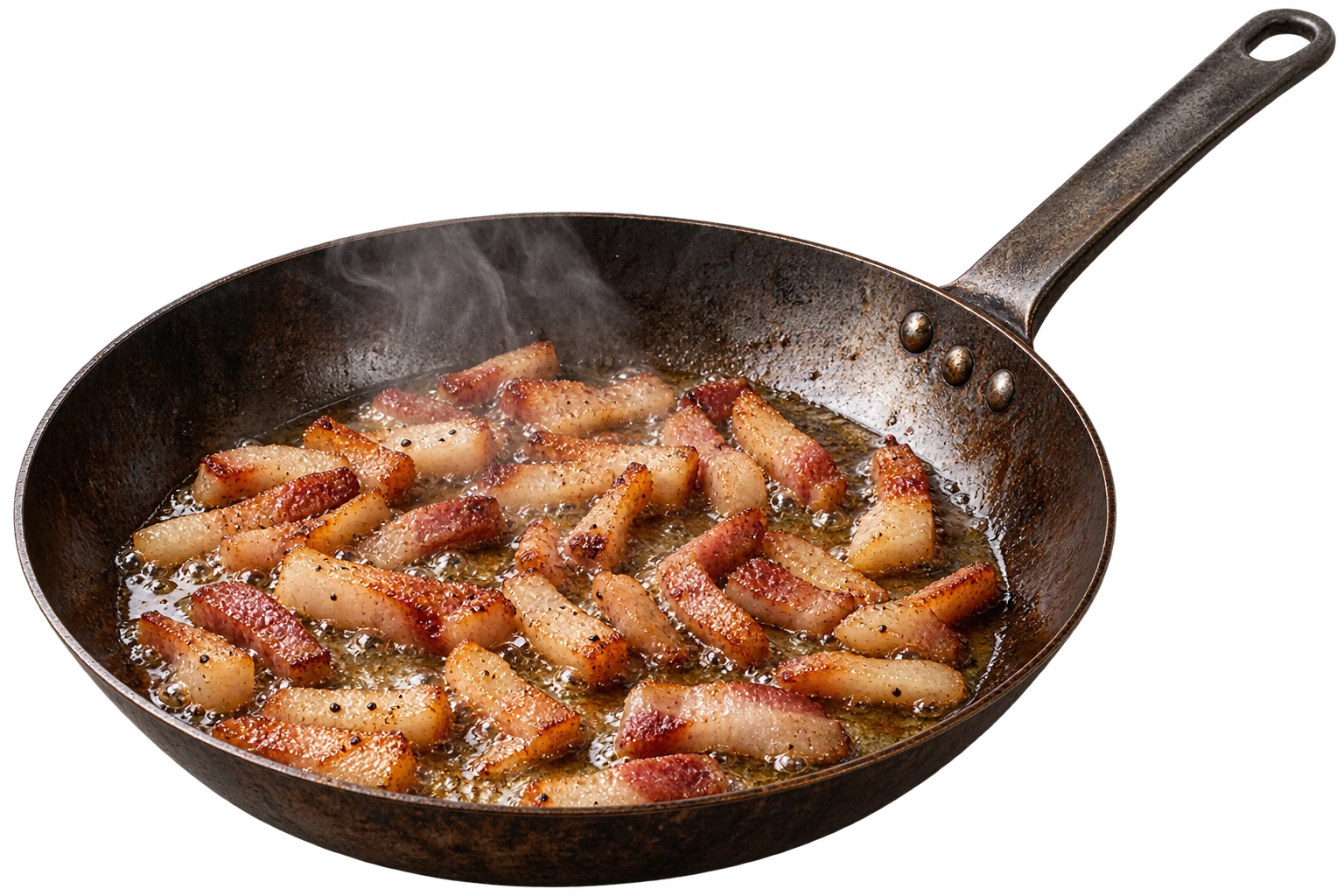
Remove a hard rind if present, then cut the guanciale into substantial little batons, roughly 5–8 mm thick as a practical kitchen choice. Give them time over moderate heat: you want rendered fat and golden edges, not blackened seasoning and a burnt pan. Start in a cool, dry pan. There is usually no need to introduce oil before the guanciale has offered its own.
Lift out some crisp pieces for the finish. Keep the flavourful fat, but use judgement: if your piece releases a great deal, you do not have to pour every last drop into two plates of pasta. Richness should hold the dish together, not leave a puddle underneath it.
Let the guanciale do the pouring.
03 / THE ARCHIVE IS NOT TAKING SIDES
Before the rules became a religion
Carbonara belongs to the story of twentieth-century cooking, not a neatly documented ancient Roman invention. Accounts involving Apennine charcoal burners explain the name through carbone, coal, or the appearance of black pepper. Another widely repeated theory connects its post-war development with eggs and bacon available to American servicemen. These are theories and recollections, not a universally settled birth certificate.
Chef Renato Gualandi’s accounts also appear in the debate about a wartime meal in 1944. Retellings disagree about details and setting. It would make a lovely dramatic opening to announce one person, one date and one victorious pan. It would also make the history sound more certain than the evidence allows. A confident caption is not a substitute for a documented origin.
1952 / CHICAGO
A recipe travels
The Accademia’s historical review describes a carbonara at Armando’s in Patricia Bronté’s Chicago restaurant guide: tagliarini, cured pork belly, Parmesan and eggs. This is an early printed account, not proof that Chicago invented the dish.
1954 / THE ITALIAN ARCHIVE
Yes, there was garlic
La Cucina Italiana’s August recipe used spaghetti, pancetta, eggs, Gruyère, garlic, salt and pepper. Its published method browned the pork with garlic, then brought in the pasta, eggs and cheese. Our description is an editorial summary; the linked archive carries the recipe itself.
1960 / CARNACINA
The plot thickens
The Accademia’s historical account notes guanciale and cream in Luigi Carnacina’s La grande cucina. Cream therefore has a place in the dish’s published history — even though it has no place in the contemporary Roman-style recipe we are making here.
These are historical examples, not instructions to combine all three versions. We can respect an archive without cooking from every page at once. Open the Italian 1954 recipe ↗
04 / THE CHEESE HAS A JOB
Pecorino, pepper, patience
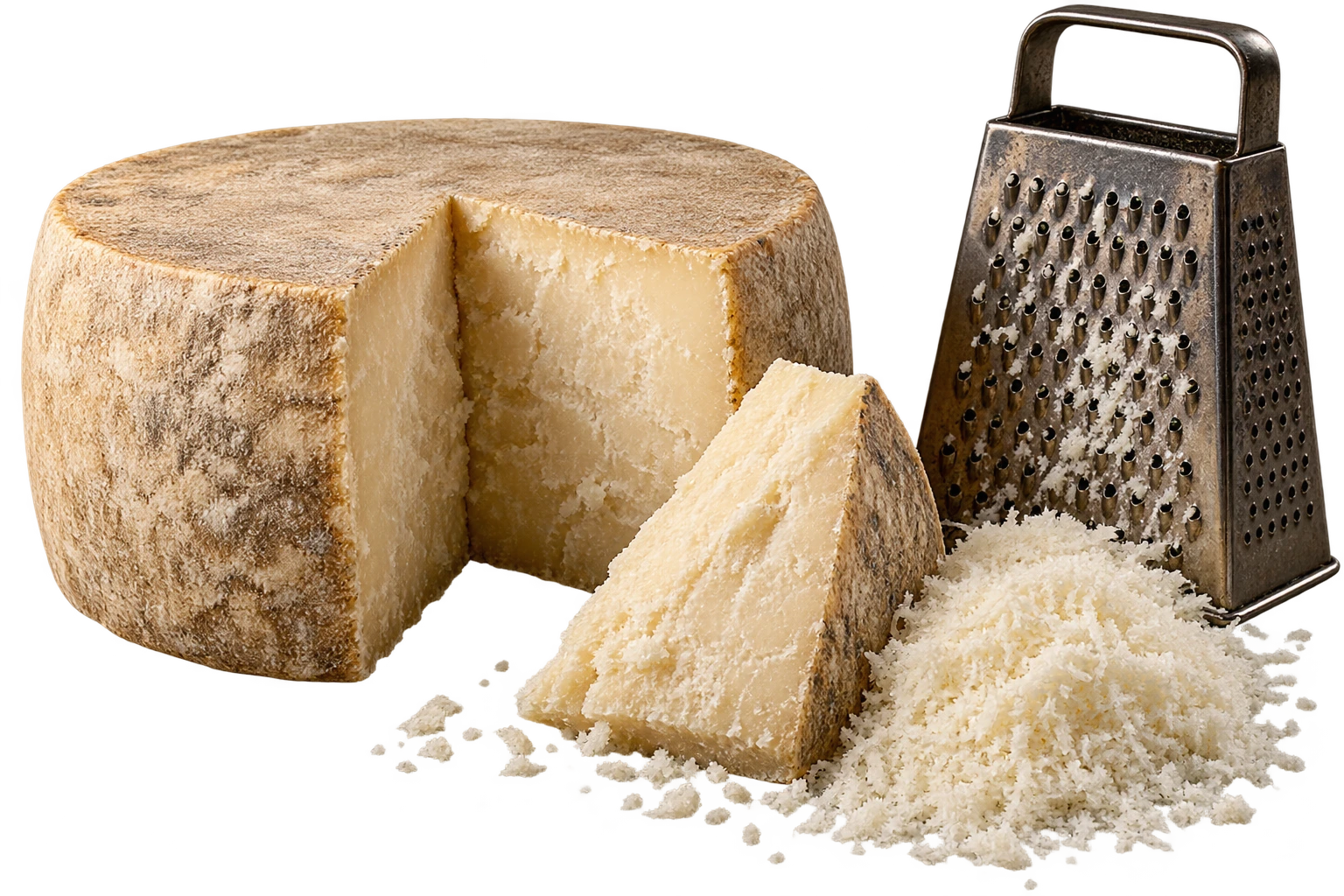
Pecorino Romano gives our recipe its salty, savoury sheep’s-milk character. Grate it finely so it disperses into the egg mixture rather than leaving stubborn chunks. A mountain of coarsely grated cheese is not a shortcut to a smooth sauce. Keep an eye on salt: both the cheese and guanciale are already bringing plenty.
Whole eggs and yolks are another area where cooks differ. More yolks give a richer, deeper-coloured sauce; whole eggs contribute more water and a different texture. Our small-batch formula uses one whole egg and two yolks for two people. It is an editorial adaptation, not a decree about the only ratio Rome permits.
Freshly ground black pepper should taste of pepper, not merely decorate the plate. Grind it while you prepare the other ingredients. A brief gentle toast is an option; scorching it is not. Put your bowl, grater and serving plates within reach before the pasta is ready. Carbonara is wonderfully quick at precisely the moment it stops being forgiving.
05 / SIZE MATTERS. SO DOES THE PACKET.
Which pasta, how thick, how long?
Dry durum-wheat spaghetti is our first choice. Rigatoni and mezze maniche are also familiar partners for this sauce: their tubes catch guanciale and their surfaces carry the emulsion. There is no single legally prescribed carbonara shape or diameter. For this recipe, choose a substantial spaghetti rather than delicate angel hair.
DRY / OUR CHOICE
Spaghetti
A practical shopping target is approximately 1.8–2 mm diameter; this is our preference, not a universal authenticity threshold. Thicker spaghettoni also work. Pasta numbers belong to individual manufacturers: No 5 from one brand does not translate automatically into another brand’s size.
Follow the specific pack. For example, the linked Barilla Spaghetti No 5 page gives 9 minutes. Other products take longer. Start tasting before the stated time and transfer while the centre still has a pleasant bite.
FRESH / AN OPTIONAL DETOUR
Egg pasta
Thin fresh ribbons may cook in roughly 2–3 minutes; the linked Rana tagliatelle gives 2 minutes. Homemade thickness, drying and shape change that timing. Thick fresh strands can need substantially longer: fresh does not automatically mean two minutes.
Do not use the dry-pasta clock for fresh pasta. Taste a strand. Floating is not a universal test of doneness. The sauce mixture should already be waiting before fresh pasta goes into the water.
Save a mug of the cloudy cooking water before draining. Do not rinse. If the pasta needs another brief toss with the guanciale, do that before introducing the egg mixture. Then take the pan off direct heat and let fierce sizzling settle. A warm pan is useful; a scorching one is an invitation to scrambled eggs.
ROMA · ROMA · ROMA
THE RECIPE NOTE / SERVES TWO
Spaghetti alla carbonara
An AJVAR LADY contemporary Roman-style adaptation, informed by the Italian classic linked below. Italian instructions are written for this feature; the English version translates them. This is not a verbatim reproduction of a historical recipe, and has not been kitchen-tested by AJVAR LADY.
Italiano
Ingredienti: 200 g di spaghetti secchi; 100 g di guanciale; 60 g di Pecorino Romano grattugiato finemente; 1 uovo intero e 2 tuorli; pepe nero; sale per l’acqua; acqua di cottura quanto basta.
Taglia il guanciale a listarelle e mettilo in una padella fredda, senza olio. Scalda a fuoco medio-basso finché il grasso si scioglie e i bordi diventano dorati. Tieni da parte qualche pezzetto croccante.
In una ciotola mescola l’uovo, i tuorli, il Pecorino e il pepe. Non aggiungere panna.
Cuoci gli spaghetti in acqua bollente moderatamente salata, seguendo i tempi della confezione e assaggiandoli. Conserva una tazza di acqua di cottura.
Scola la pasta al dente e falla insaporire brevemente nella padella con il guanciale. Togli dal fuoco e lascia diminuire il calore più intenso.
Aggiungi il composto di uova e formaggio e mescola continuamente. Versa poca acqua di cottura alla volta fino a ottenere una salsa lucida che avvolga la pasta, non un brodo.
Se occorre, scalda con estrema delicatezza continuando a mescolare; evita il bollore. Servi subito con il guanciale tenuto da parte e altro pepe.
English
Ingredients: 200 g dried spaghetti; 100 g guanciale; 60 g finely grated Pecorino Romano; 1 whole egg and 2 yolks; black pepper; salt for the water; reserved pasta water as needed.
Cut the guanciale into batons and place in a cold pan without oil. Heat over medium-low heat until the fat renders and the edges turn golden. Reserve a few crisp pieces.
Mix the whole egg, yolks, Pecorino and pepper in a bowl. Do not add cream.
Cook the spaghetti in moderately salted boiling water, following the pack and tasting. Reserve a mug of cooking water.
Drain al dente and briefly toss with the guanciale in the pan. Remove from the heat and allow the fiercest heat to subside.
Add the egg-and-cheese mixture and stir continuously. Add cooking water a little at a time until the sauce is glossy and coats the pasta; you are not making soup.
If necessary, warm extremely gently while stirring; do not boil. Serve immediately with the reserved guanciale and more pepper.
NO CREAM. NOT A DROP.
Eggs should be handled and refrigerated appropriately. Pasteurised eggs are a useful option, especially for people advised to avoid undercooked eggs; a glossy sauce is not a verified food-safety temperature.
06 / WHEN THE SAUCE MISBEHAVES
Save the dinner, not your pride
If the sauce is too thick, a small splash of hot pasta water and energetic tossing may bring it back. If it is thin, keep moving the pasta in gentle residual warmth rather than turning the burner to its highest setting. Cheese can clump when the mixture is poorly dispersed or overheated; finely grating it and controlling heat give you a better starting point.
If the eggs have set into obvious curds, cream will not turn them back into an emulsion. You can still eat your dinner, but the next attempt needs less heat, not more ingredients. Carbonara rewards preparation: grate first, mix first, save water, then move deliberately.
Serve it immediately. This is not a dish to finish, photograph for twenty minutes and then wonder why the sauce has tightened. Warm plates help; a group chat can wait.
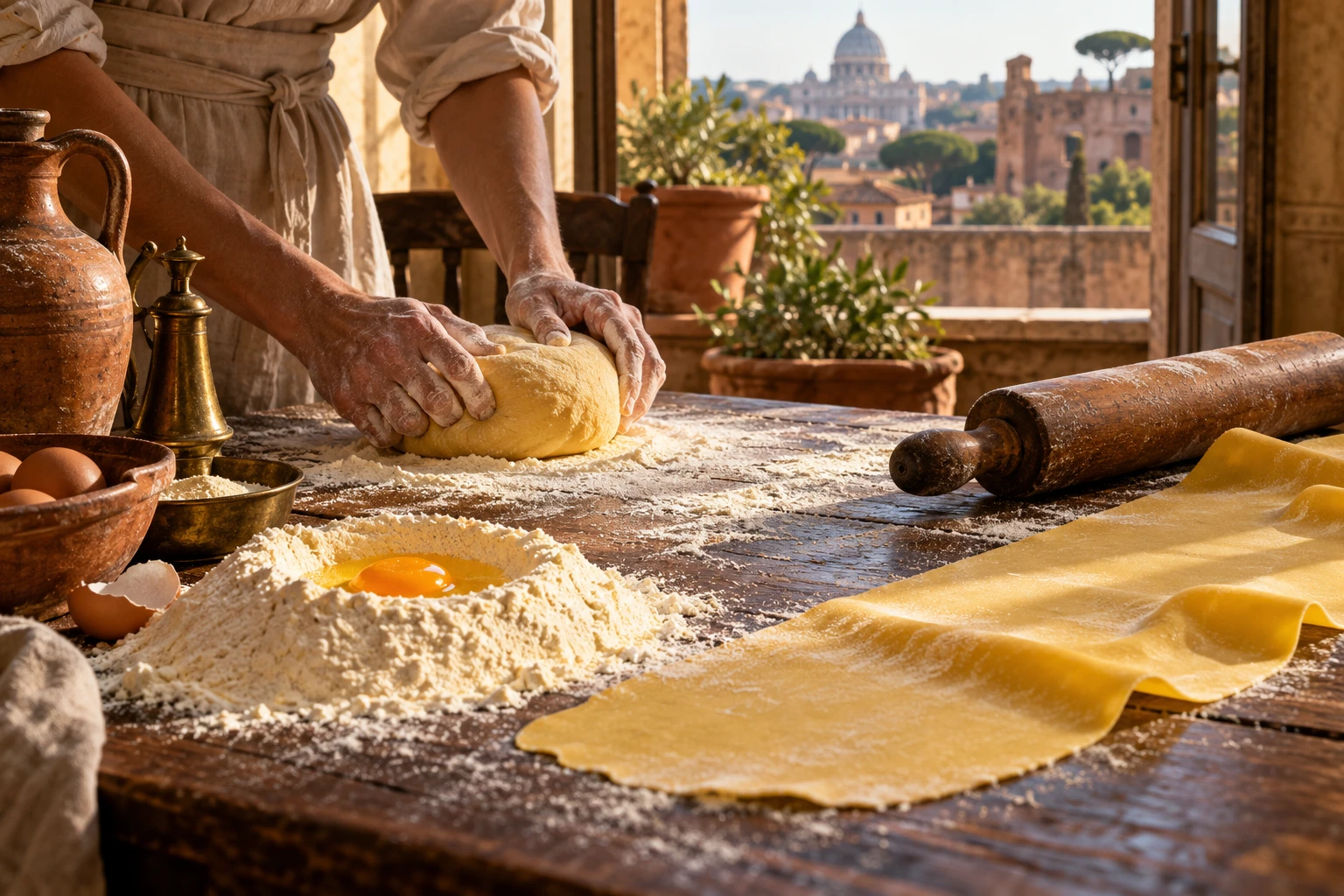
A fresh-pasta afternoon — an optional craft, not a carbonara requirement
The flour-and-egg detour
Making fresh pasta is its own pleasure. A flour well, eggs, kneading and resting give you a different kind of afternoon from opening a packet. But our dry durum-wheat spaghetti does not require eggs in its dough. The photograph illustrates fresh-pasta craft; it is not an instruction to replace the spaghetti in the recipe. If you choose fresh ribbons, allow for their different texture, water absorption and much shorter cooking window.
07 / FOUR ROMAN ADDRESSES, NO FAKE WORLD TITLE
Where would we book a table?
There is no unanimous, objective champion of every carbonara on Earth, and excellent versions exist outside Rome. These are four Roman restaurants worth investigating through their official pages. Menus, opening days and booking arrangements change; check before building your evening around a plate. These are researched suggestions, not four meals we are pretending to have personally eaten.
A salumeria and restaurant where the pantry is part of the attraction. Check the official menu for its Roman pasta dishes, then book through the restaurant’s own channels.
Luciano Monosilio is closely associated with carbonara. Visit for the chef’s approach to pasta rather than a claim that a crown settles everyone’s taste.
A Trastevere address with carbonara on its official presentation. Look up its current service and access arrangements rather than assuming every Roman trattoria takes bookings in the same way.
Sarah Cicolini’s contemporary trattoria belongs in the conversation about Roman cooking. Consult its official links for the current menu and reservations; a restaurant is more than one famous dish.
The sauce should cling. The rules should have context.
The reading behind the twirl
All food scenes and transparent objects in this feature are AI-generated editorial illustrations, not documentary photographs of the named restaurants. Historical recipes are described in our own words and linked to their publishers.